
What Makes an Effective Railway Track Fence
Published
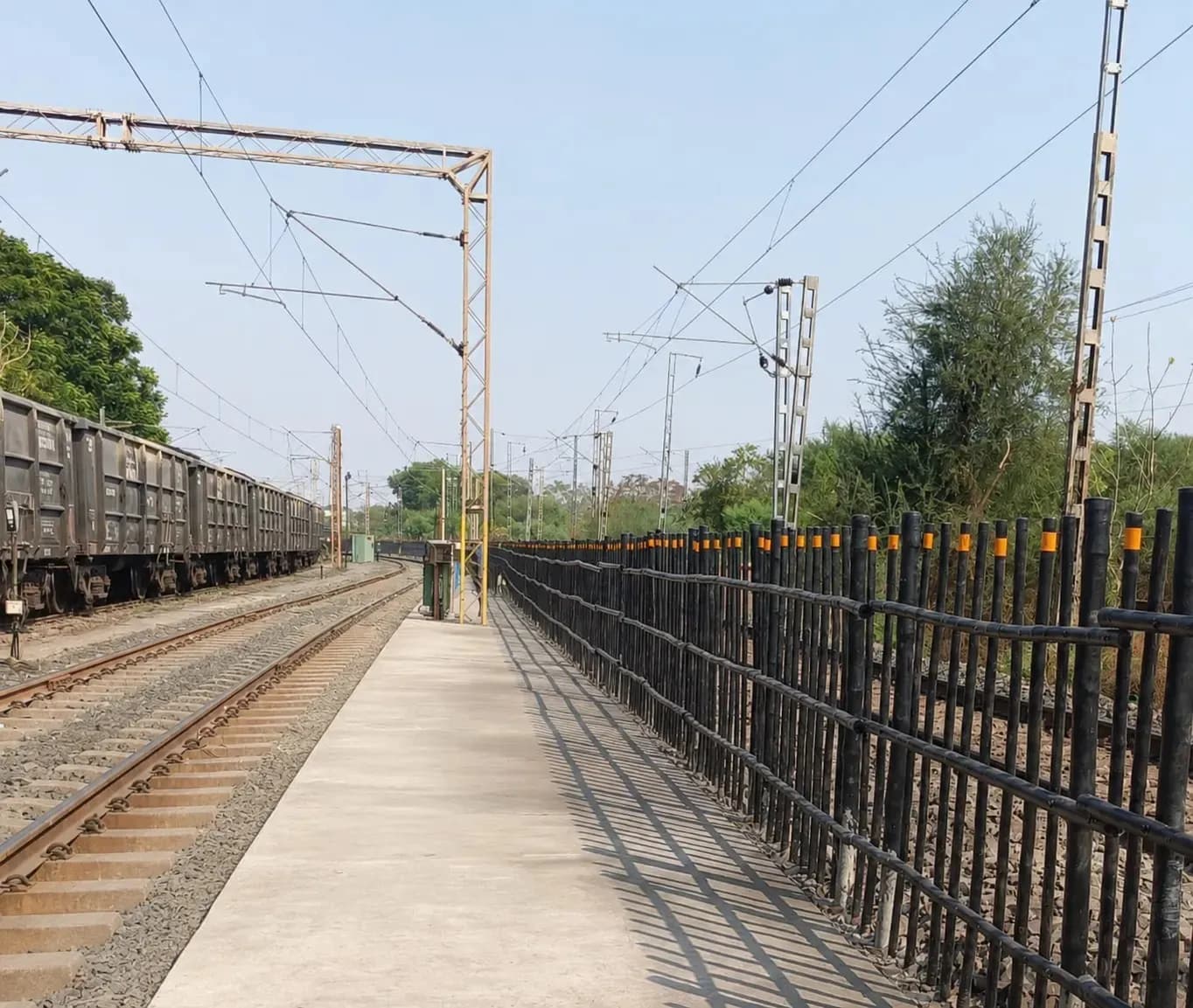
A railway fence is not just a line of posts. The Railway Board's fencing policy sets out what a fence on railway land must and must not do. This article reads those criteria and shows how a bamboo fence is designed against them.
The Board's four options
The February 2023 policy lists four fencing options: Bezinal wire, weld mesh, UPVC, and bamboo treated with creosote and coated with HDPE. Zones can choose among them depending on the location.
The two conditions in the policy
The policy lists the elements that decide the type of fence. The fence should be strong enough for its purpose, easy and fast to install, of sufficient life and easily repairable, not prone to theft, low in expenditure when relocated, and not a medium for induction current from overhead lines. It should also completely seal against trespassing by animals and vehicles at level crossings, ROB and RUB, and bridges, with access control such as gates for maintenance and emergency vehicles. Two of these are discussed below.
Theft matters because a fence that is stolen has to be replaced, and a gap in the fence is a gap in protection. Metal fencing can be sold for scrap. Bamboo has no scrap value, and BSU's highway installations have recorded no theft on site.
Induction matters because track fences run next to overhead lines. Utility guidance on fencing near high-voltage lines identifies long metal fences as the hazard, because they can pick up induced voltage, and treats timber and other non-conductive fences as the lower-risk choice. A Bahu-Balli fence has no continuous metal run: its posts and rails are HDPE-coated bamboo, and metal appears only in the galvanised nuts, bolts and screws at the joints. Specific railway electrical requirements still apply, and the zonal railway decides on site.
Placement
The November 2022 proposal for the Ghaziabad to Kanpur stretch described the fence as standing between 4.5 and 7 m from the track. Distance from the track matters for two reasons: staff need room to work, and cattle need to be stopped before they reach the line.
Gates and access
A track fence needs places where staff can cross. Bahu-Balli fences are built with gates of a standard size, used at points where railway staff need access, as in the Bilaspur yards.
Visibility
In yards, the fences at Bilaspur carry white retro-reflective tape on the vertical members, so staff can see the line of the fence in low light.
Putting it together
An effective fence meets the conditions in the policy, is placed so that staff and cattle are kept apart from the track, and is something that can be installed and repaired by the labour a railway division already has. Bamboo is one of the four options the Board lists. How it came to be listed is in the policy timeline.
For product information, see Bahu-Balli Bamboo Railings & Fence.