
NH-30 Bamboo Barrier Test: Raipur to Simga
Published
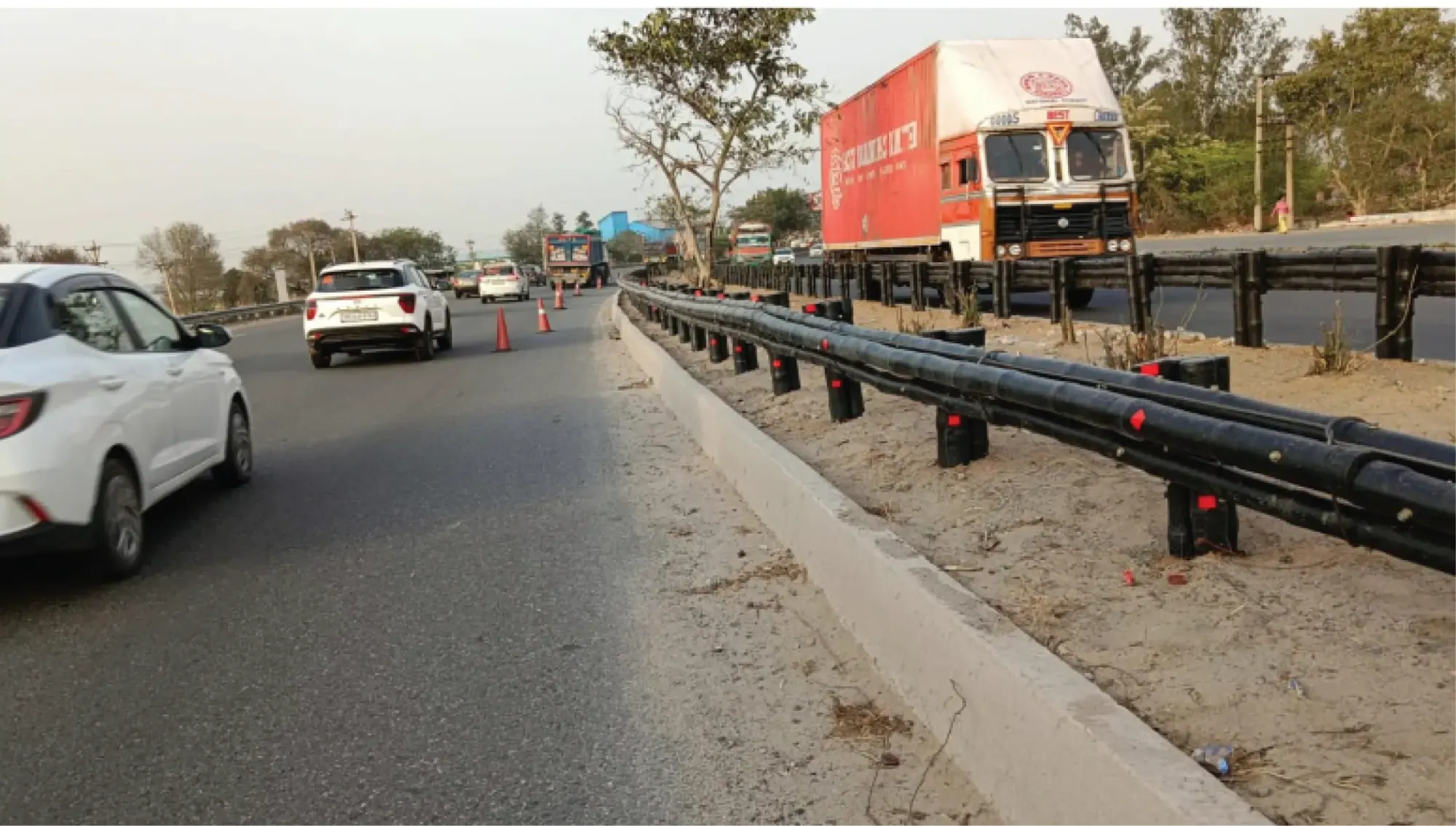
A crash barrier proves itself in only one way: when a vehicle hits it. On 24 November 2023, a loaded multi-axle trailer struck the Kooch Kavach section on NH-30 between Raipur and Simga. The barrier redirected it.
The site
BSU installed 200 m of Kooch Kavach on NH-30 on 5 October 2023. The independent consultant and NHAI's Raipur unit monitored the site. It was the second long trial, following the one on NH-930.
What happened
Seven weeks after installation, a loaded multi-axle trailer struck the barrier. The trailer did not cross the barrier line. It was redirected along the carriageway, and the driver was safe.
A loaded multi-axle trailer is a demanding case. It carries a lot of mass and keeps momentum through the impact. A barrier that keeps such a vehicle on the carriageway side is doing the most important thing a roadside barrier is asked to do.
What the records say
The consultant's report of 15 February 2024 and NHAI's letter of 20 March 2024 both record the incident. They also record that there was no theft at the site during the monitoring period.
These two documents come from the people responsible for the road, not from BSU. They are the basis for treating the barrier as a working roadside system.
What it shows
The incident is one real event on one site. It does not replace formal crash testing, and BSU does not present it as that. What it does show is that an engineered bamboo barrier, installed by a standard method, performed its function in a heavy-vehicle impact on a National Highway.
How this connects to other findings
About two years later, VNIT Nagpur evaluated this same site and reported on its condition. That evaluation is in VNIT evaluation. The wider project sequence is in the Kooch Kavach story.
For project information, see Kooch Kavach: World's First Bamboo Crash Barrier.